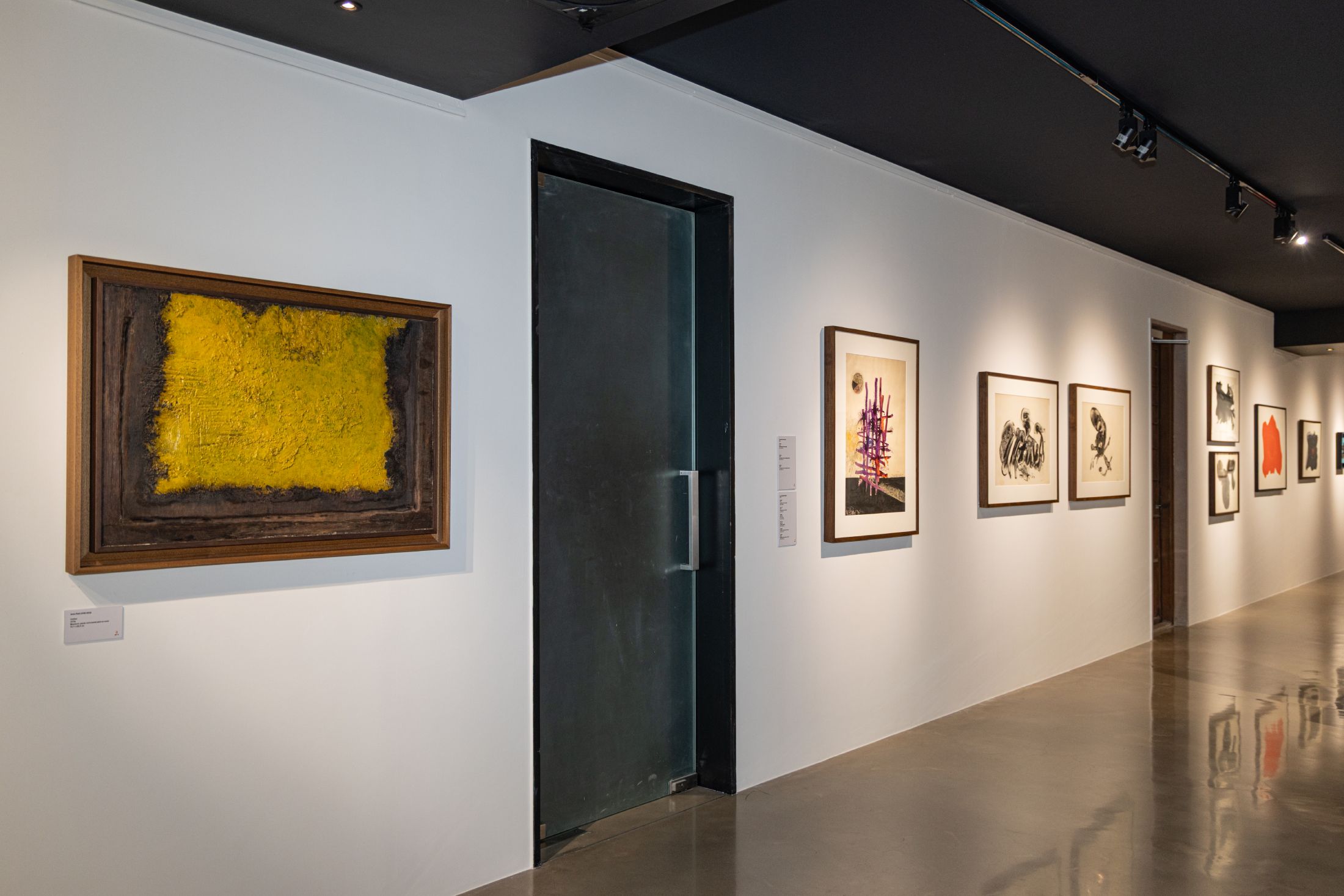
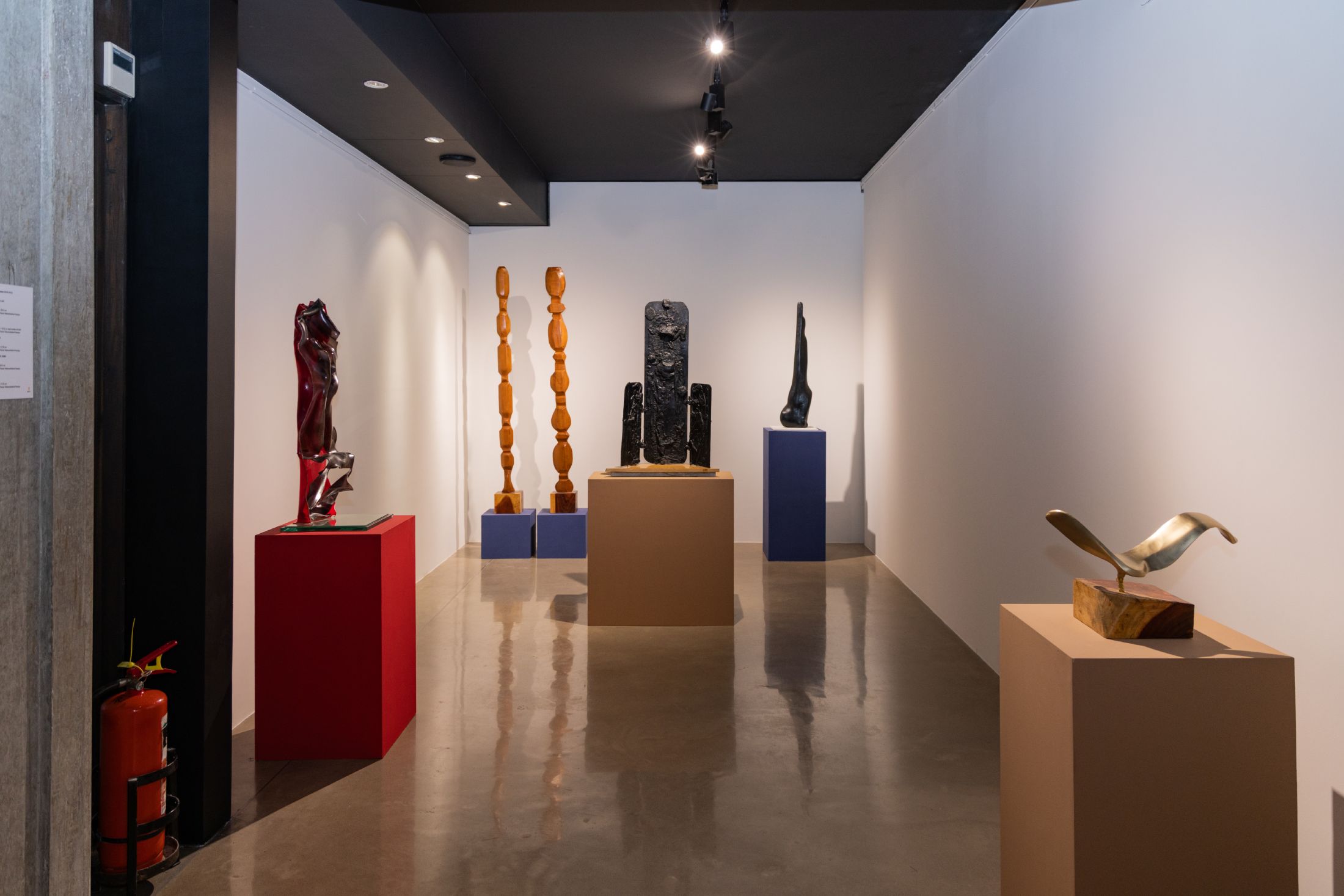
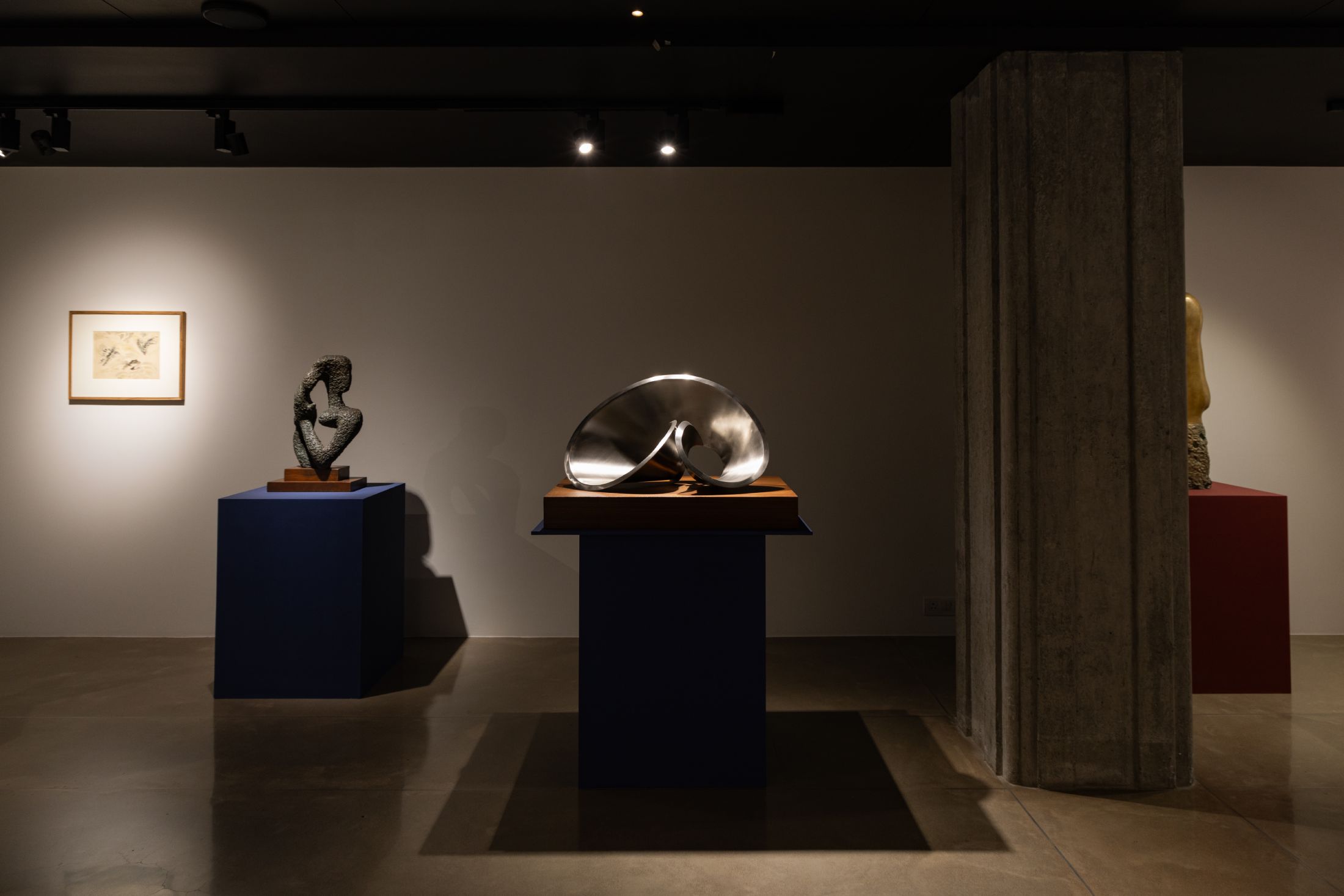
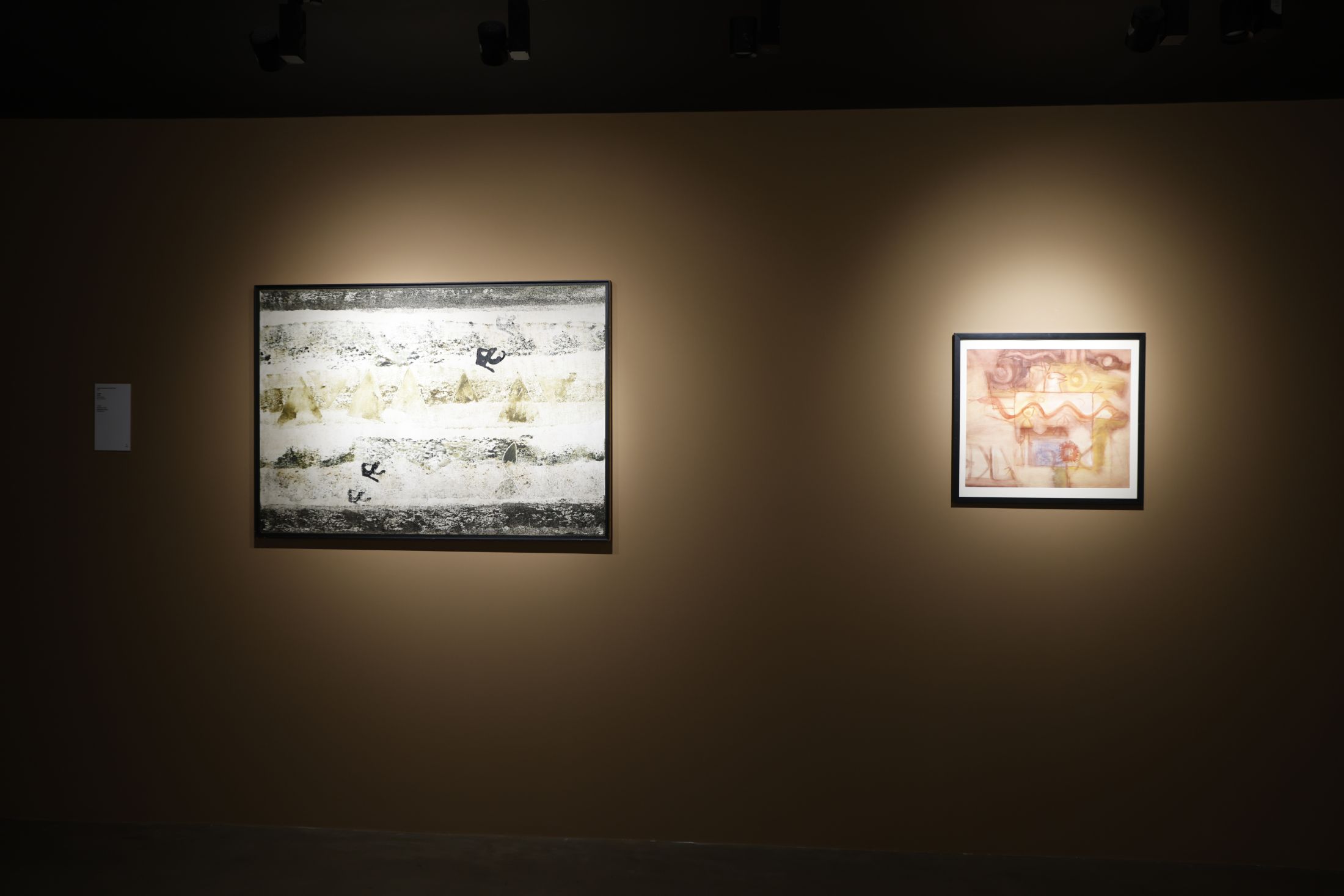
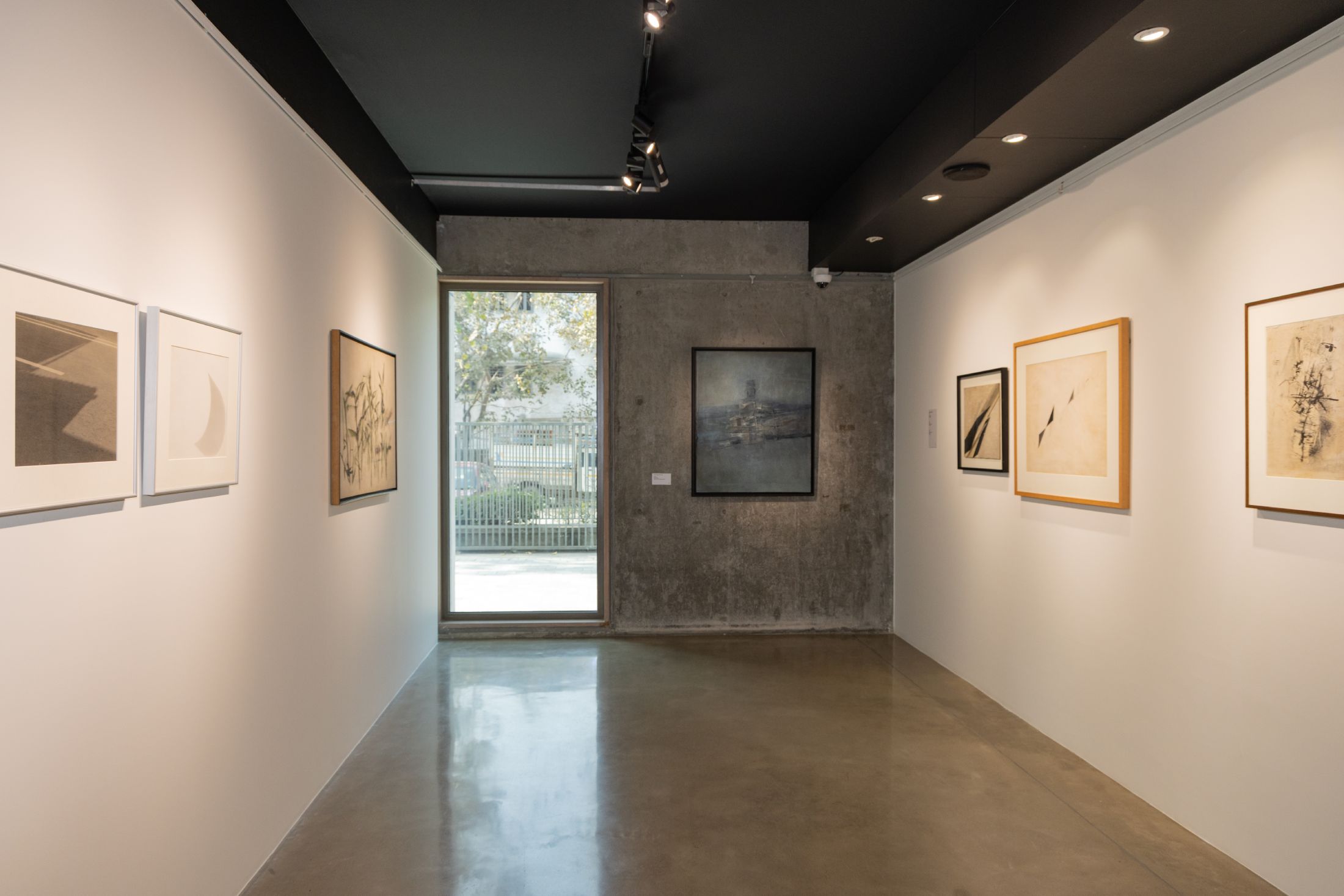
An Abstract Turn - 1An Abstract Turn - 2An Abstract Turn - 3An Abstract Turn - 4An Abstract Turn - 5

The curatorial intent of An Abstract Turn is to trace the evolution of abstraction from its early experiments in stylization and distortion to the later languages of minimalism, primitivism and material and sensory investigations at the Faculty of Fine Arts, M.S. University of Baroda, through the practices of key alumni and faculty.

The Faculty of Fine Arts at M.S. University, established in 1950, has long been a crucible for experimentation and critical artistic discourse in India. While its lineage is often shaped by the figurative and narrative traditions of the Baroda School, this exhibition proposes an alternate historiography, one that centres abstraction as a radical and often quiet force running through its artistic legacy. Rather than treating abstraction merely as formal reduction or non-representation, the exhibition approaches it as a method of thinking, embodiment, and expression. By mapping this trajectory through selected artists, the exhibition foregrounds the plurality of abstraction—as meditative structure, as material foregrounding, as postcolonial cartography, or as feminist resistance.

The project includes major figures such as Jeram Patel, Himmat Shah, Ira Chaudhuri, J. Swaminathan, Mahendra Pandya, Nasreen Mohammedi, Shanti Dave, alongside mid-career and emergent artists like Avantika Bawa. Together, they create a dynamic intergenerational dialogue that highlights Baroda’s enduring role in shaping abstraction as both practice and pedagogy.
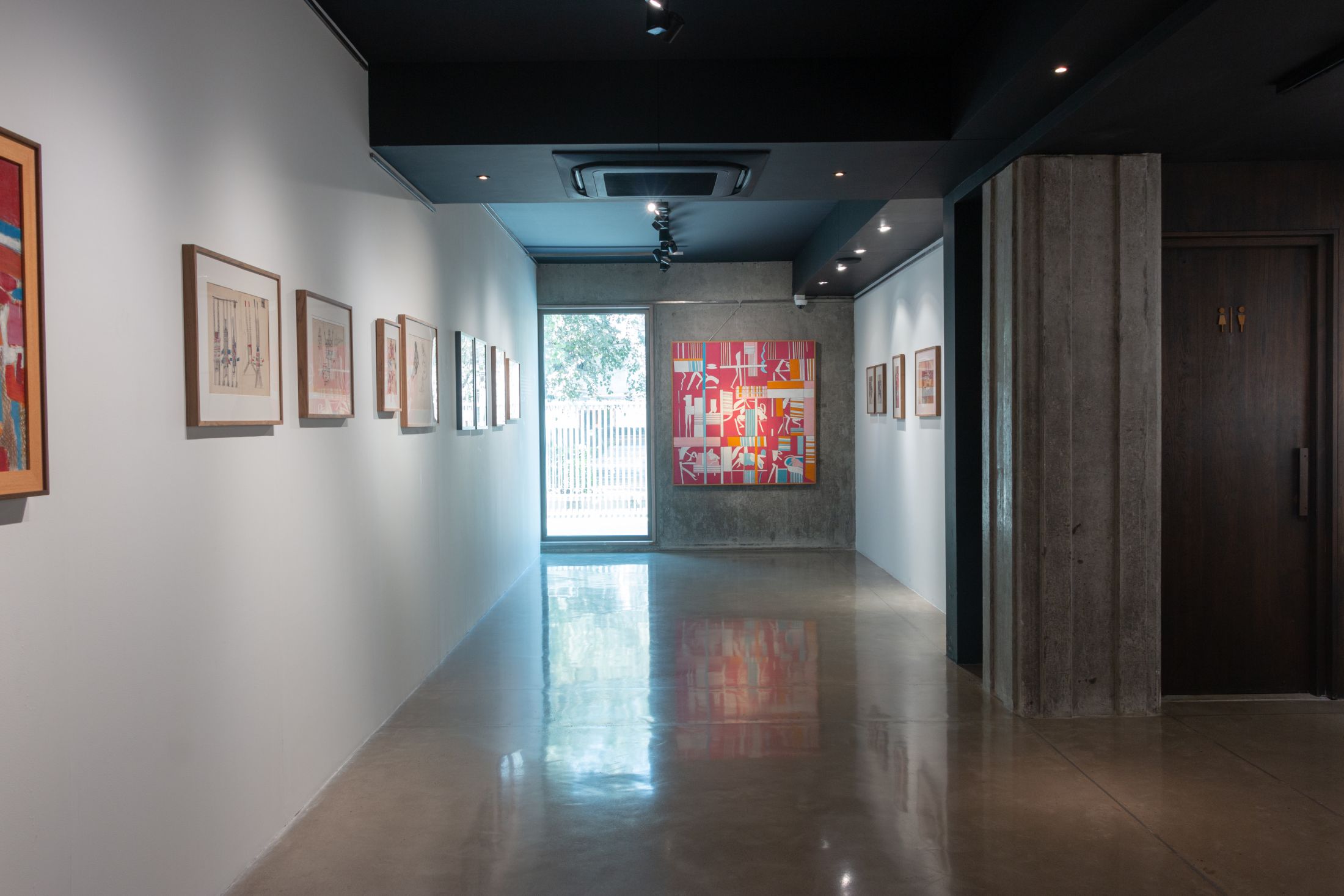
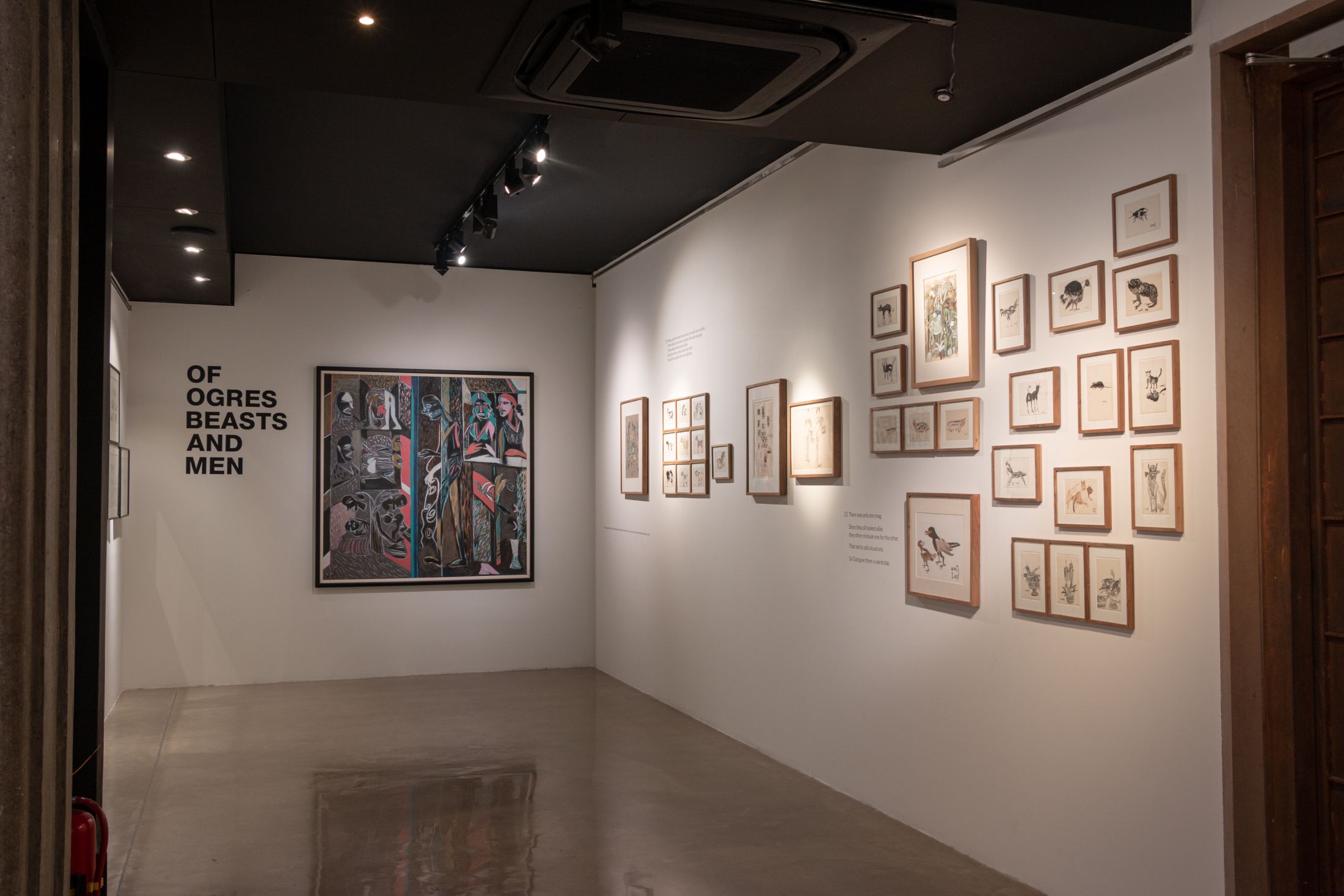
Of Ogres Beasts and Men: K. G. Subramanyan - 1Of Ogres Beasts and Men: K. G. Subramanyan - 2Of Ogres Beasts and Men: K. G. Subramanyan - 3Of Ogres Beasts and Men: K. G. Subramanyan - 4Of Ogres Beasts and Men: K. G. Subramanyan - 5

aate haiñ ġhaib se ye mazāmīñ ḳhayāl meñ / 'ġhālib' sarīr-e-ḳhāma navā-e-sarosh hai

– Mirza Ghalib; loosely translated, it means there are those tasked with expounding the profound truths of the world. But to do so in the scarcity of a single lifetime, the hurried strokes of their brush begin to resemble the flapping wings of angels.

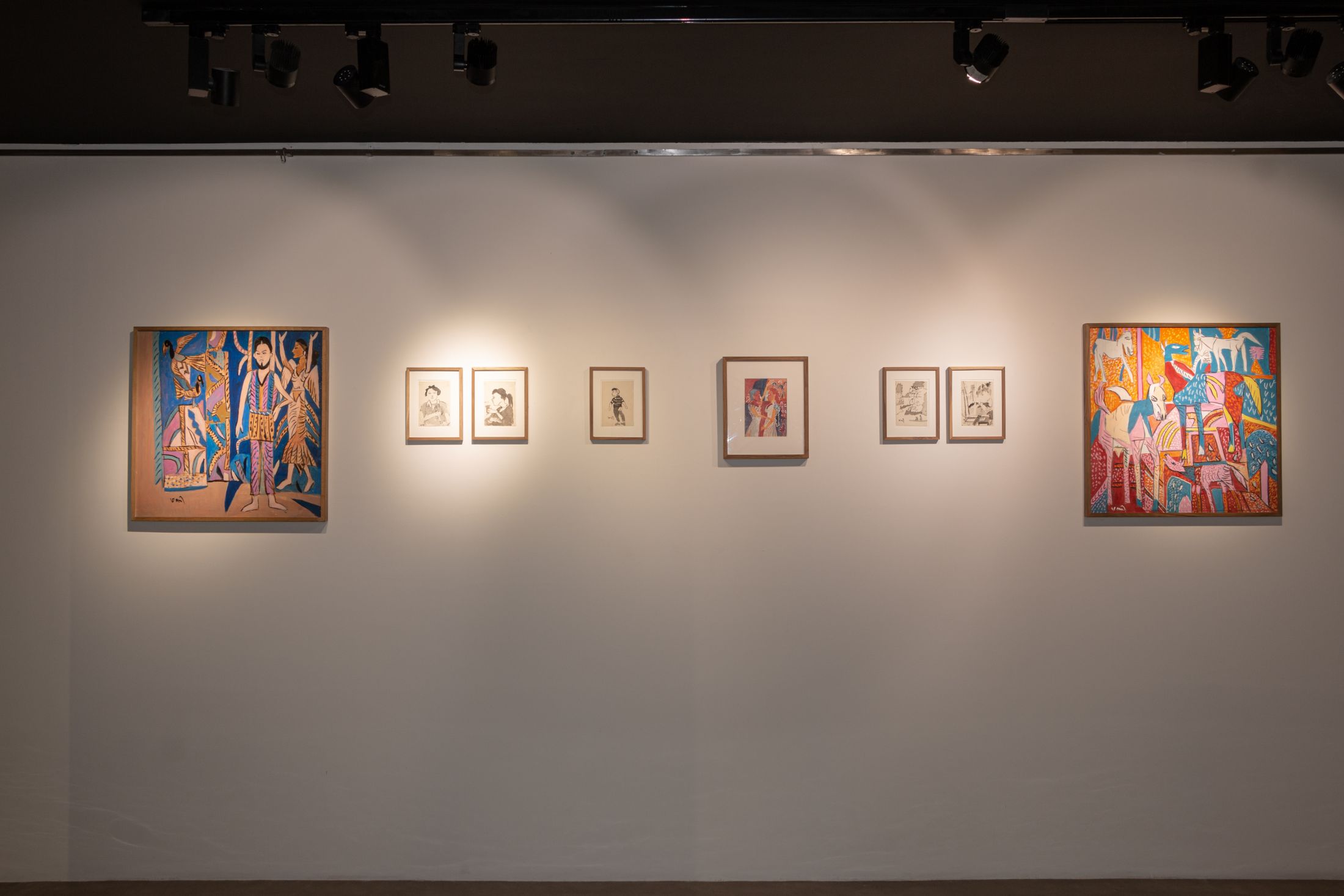
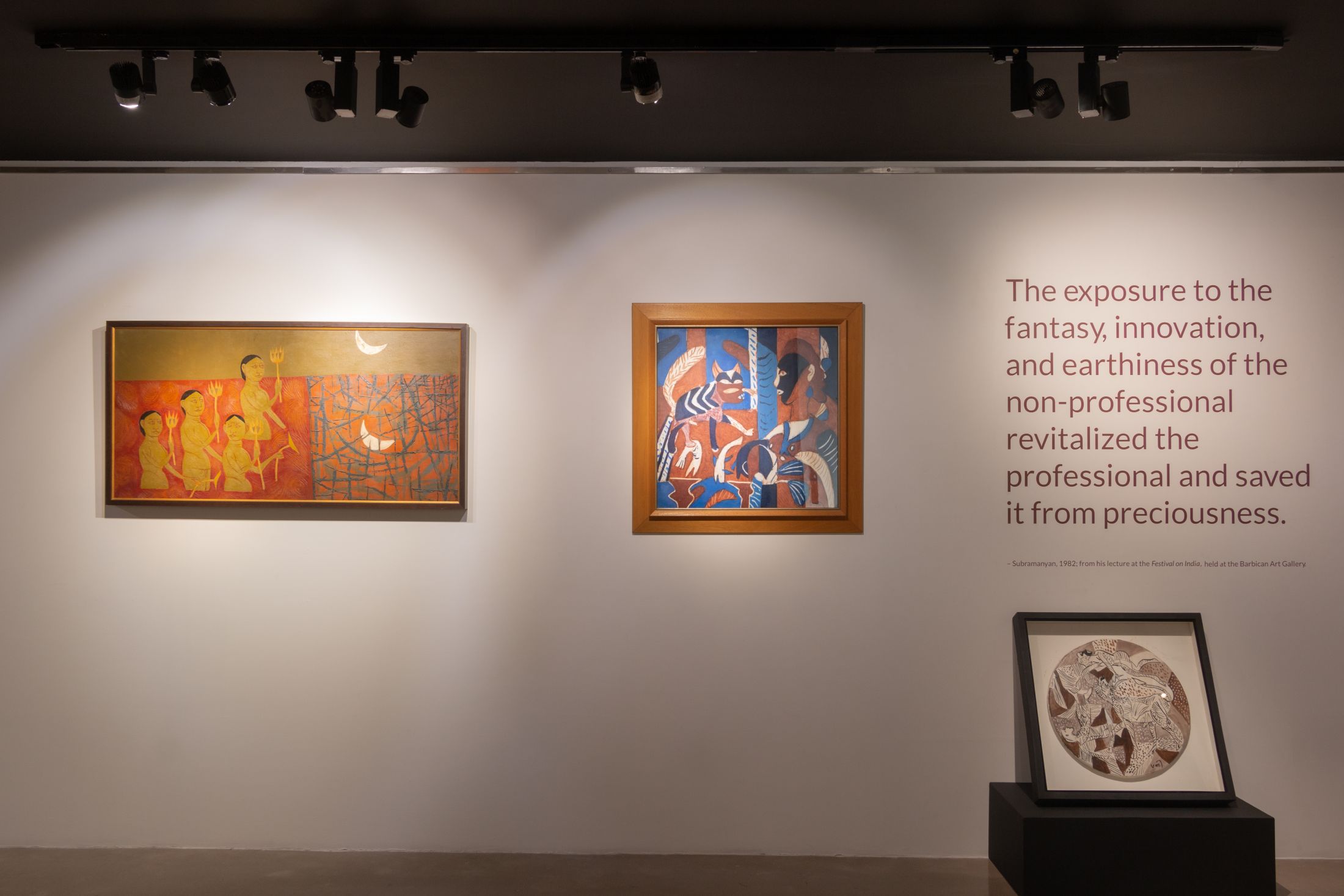
K. G. Subramanyan (1924–2016), or Mani Sir as I knew him, observed the world with the curiosity and humility of a scientist. For him, ‘all the world was a stage’ indeed, and his artworks depict the world he inhabited with no less theatrical flair than The Bard himself. Evident in paintings often overrun with narratives, color palettes that seem decidedly unfettered, and compositions divided into linear planes to resemble progressive or concurrent scenes, or perhaps a set behind the proscenium. The subject of his theater represents a shrewd pastiche of the human experience – that is, the ceremony of tradition, the fantasy of myth, the sanctity of gods, the piety of the temple, and the truth of the grotesque. His triumph, however, lies in the levity with which he reflects all aspects of it; beauty and terror. Albeit often subversive, the overarching layer of humor makes his practice immediately accessible but likewise invites multiple conversations over time.

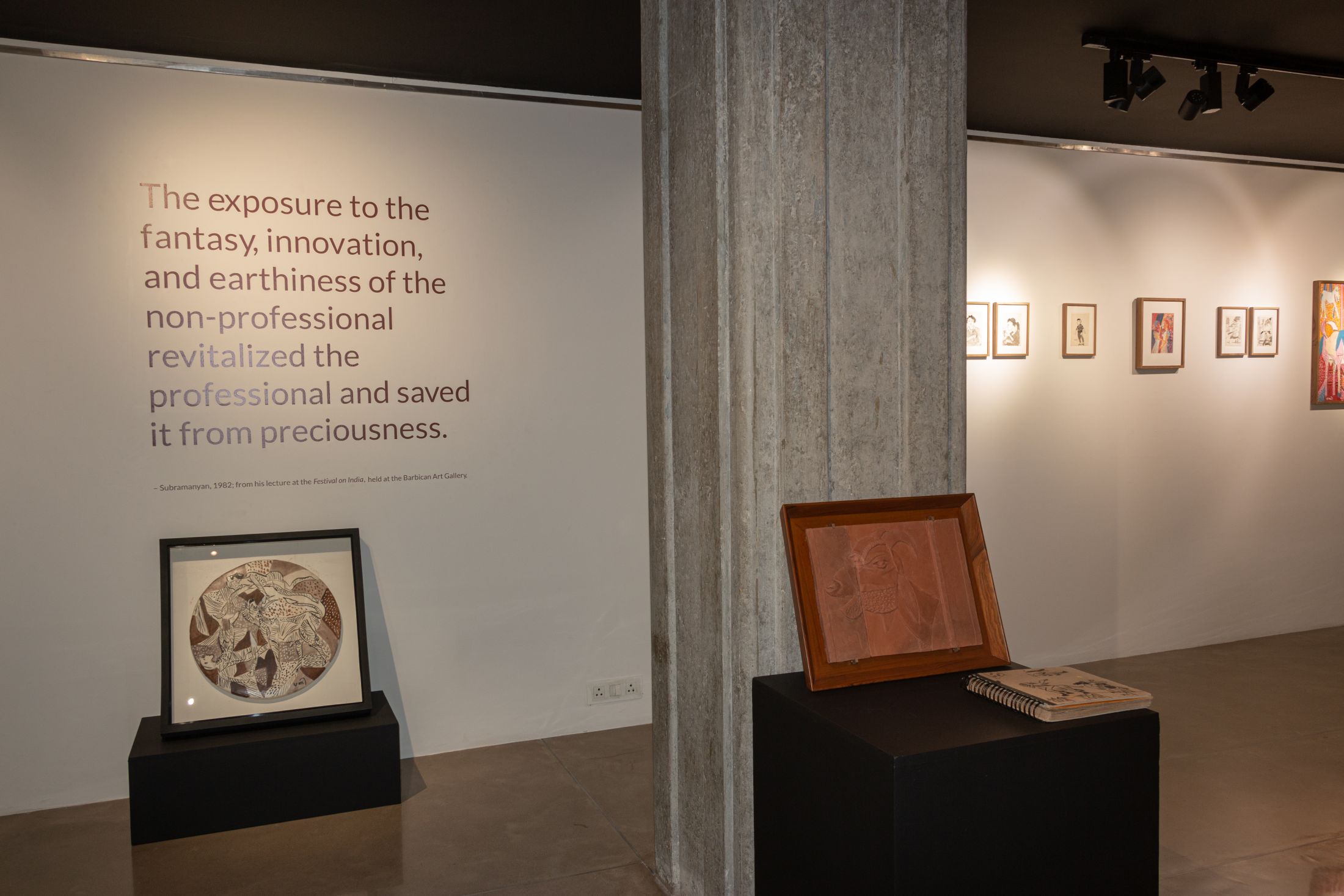
Of Ogres Beasts and Men, references a collection of three illustrated books for children, published in 1985. Subramanyan was one of India’s most eminent artists who worked with diverse media and materials. He was known as much for his wide-ranging scholarship as for his artworks full of wit, subversion, folklore and critical social commentary. His illustrated books for children bear testimony to this multifaceted talent; in the guise of mythical stories, they provide elegant parodies on diverse subjects of universal interest. Our Friends the Ogres tackles industrialization and capitalism; When God First Made the Animals He Made Them All Alike is a fable ruminating on the current human condition; The King and the Little Man is a sharp critique of the politics of media, consumerism, and the ultimate insignificance of power.

Using humor as the point of entry to Subramanyan’s lexicon, this exhibition attempts to illustrate some of the stylistic and thematic registers of his practice. Bringing together a selection of his works from the Ark collection to mark the occasion of the formal announcement for the forthcoming Ark Museum, the exhibition is thus, foremost a prayer, an invocation of blessings from the Gods, the goodwill of our community, and a celebration of Mani Sir’s legacy.

— Nupur Dalmia, February 2024.

With special thanks to Abha Sheth, Amshu Chukki, Dhaivat Shah, Keshav Mahendru, Naveen Kishore, Nihaal Faizal, Rachita Gupta, Sanket Jadia, Seema Dalmia, and Subha De.

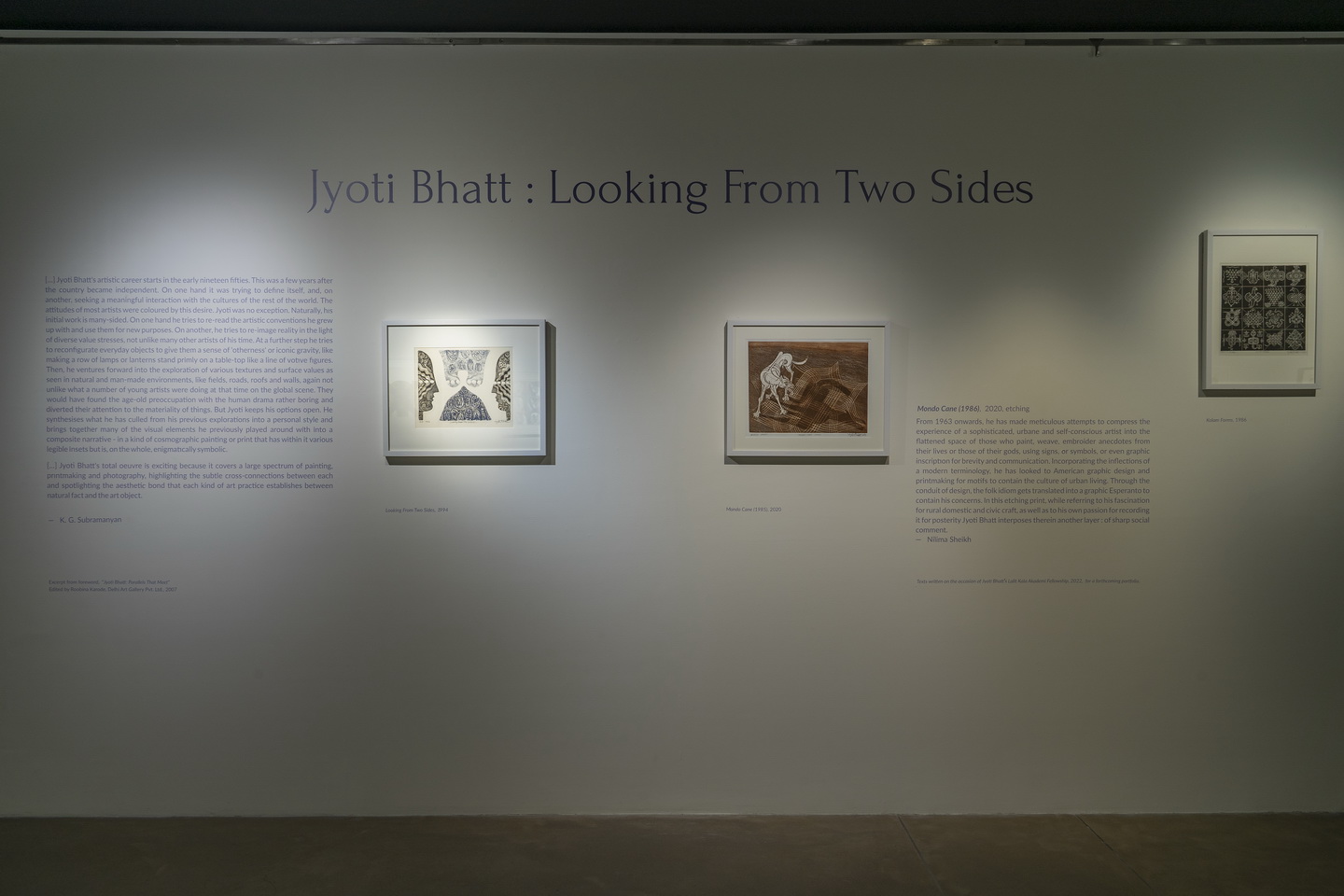
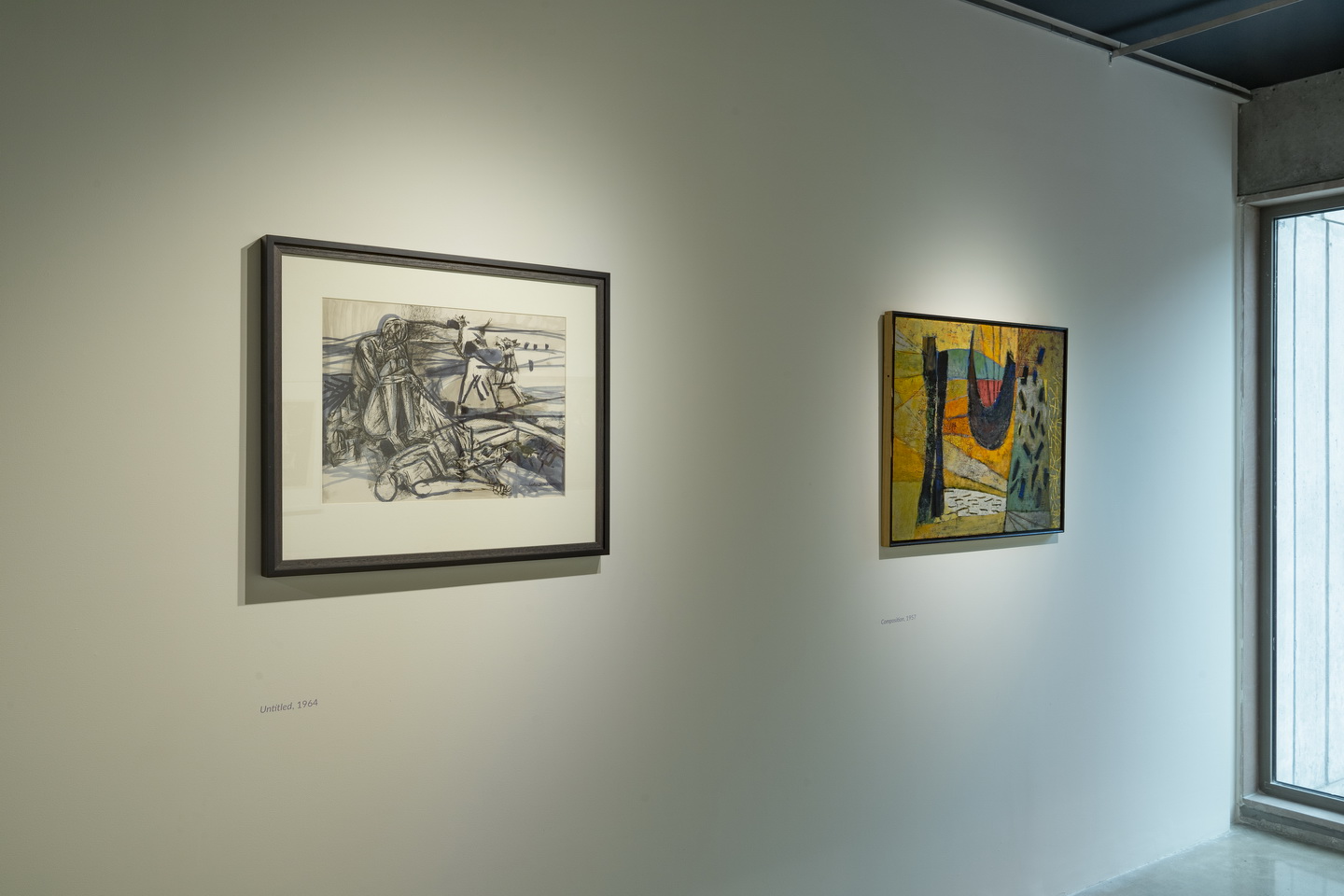
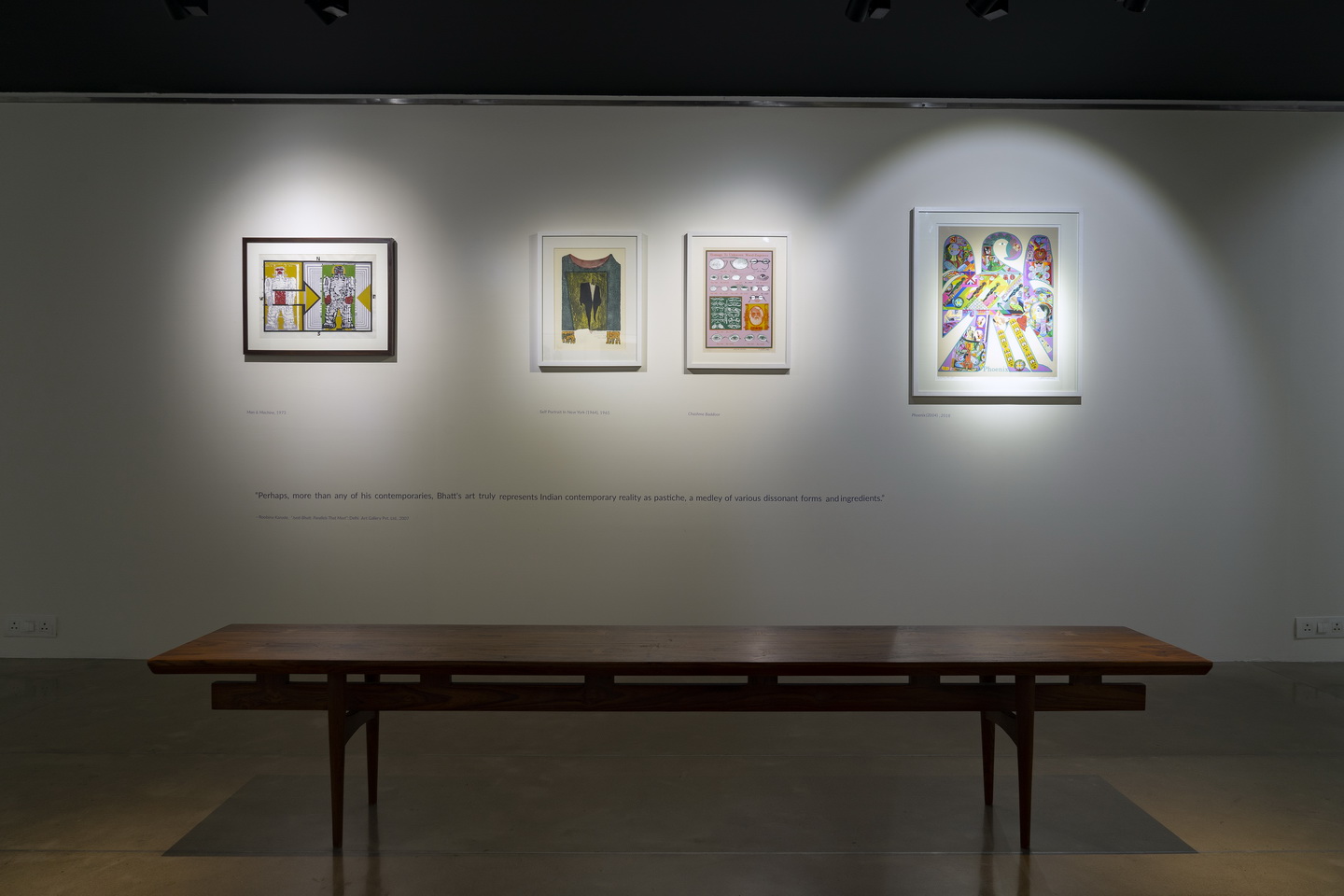
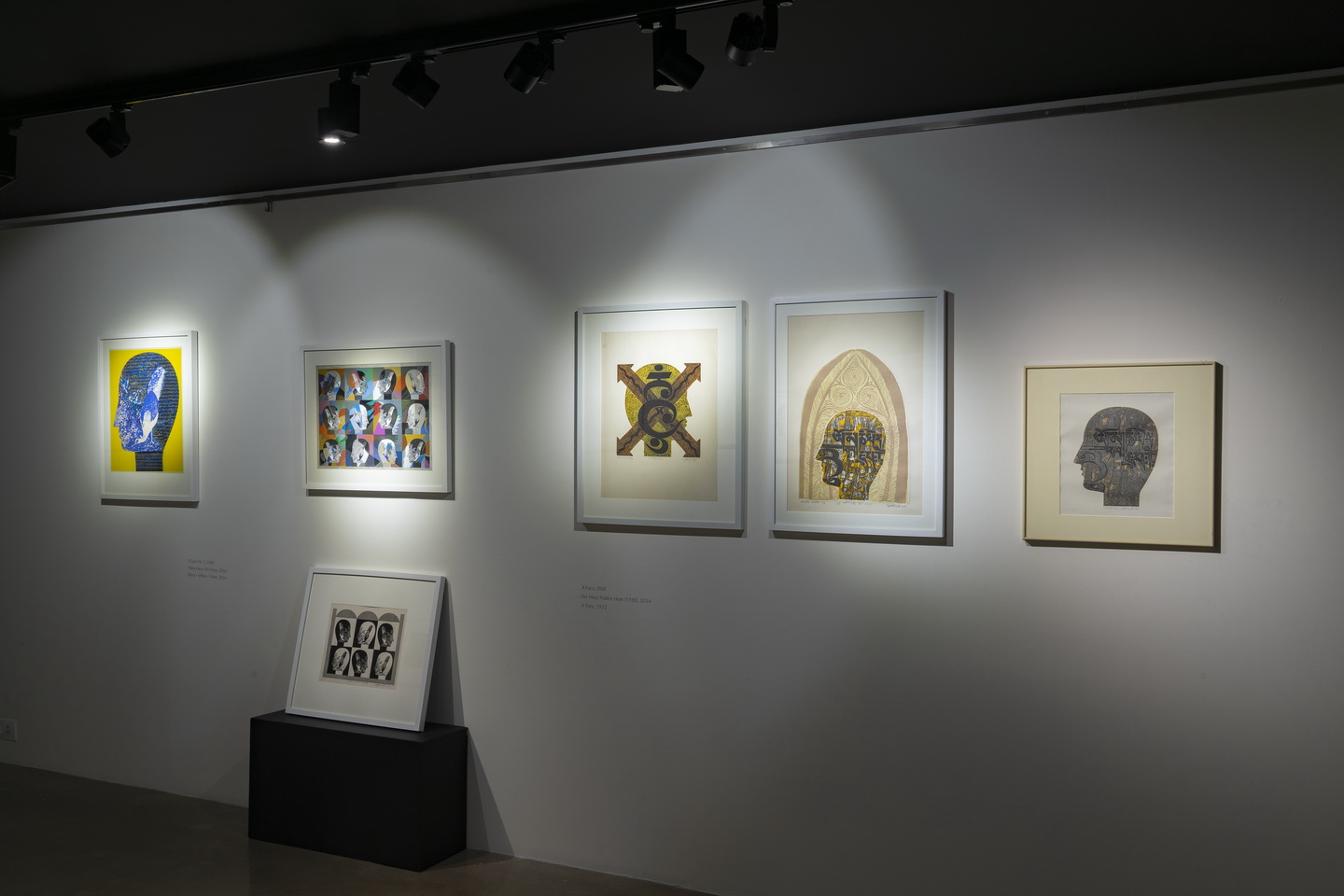
Looking From Two Sides: Jyoti Bhatt - 1Looking From Two Sides: Jyoti Bhatt - 2Looking From Two Sides: Jyoti Bhatt - 3Looking From Two Sides: Jyoti Bhatt - 4Looking From Two Sides: Jyoti Bhatt - 5

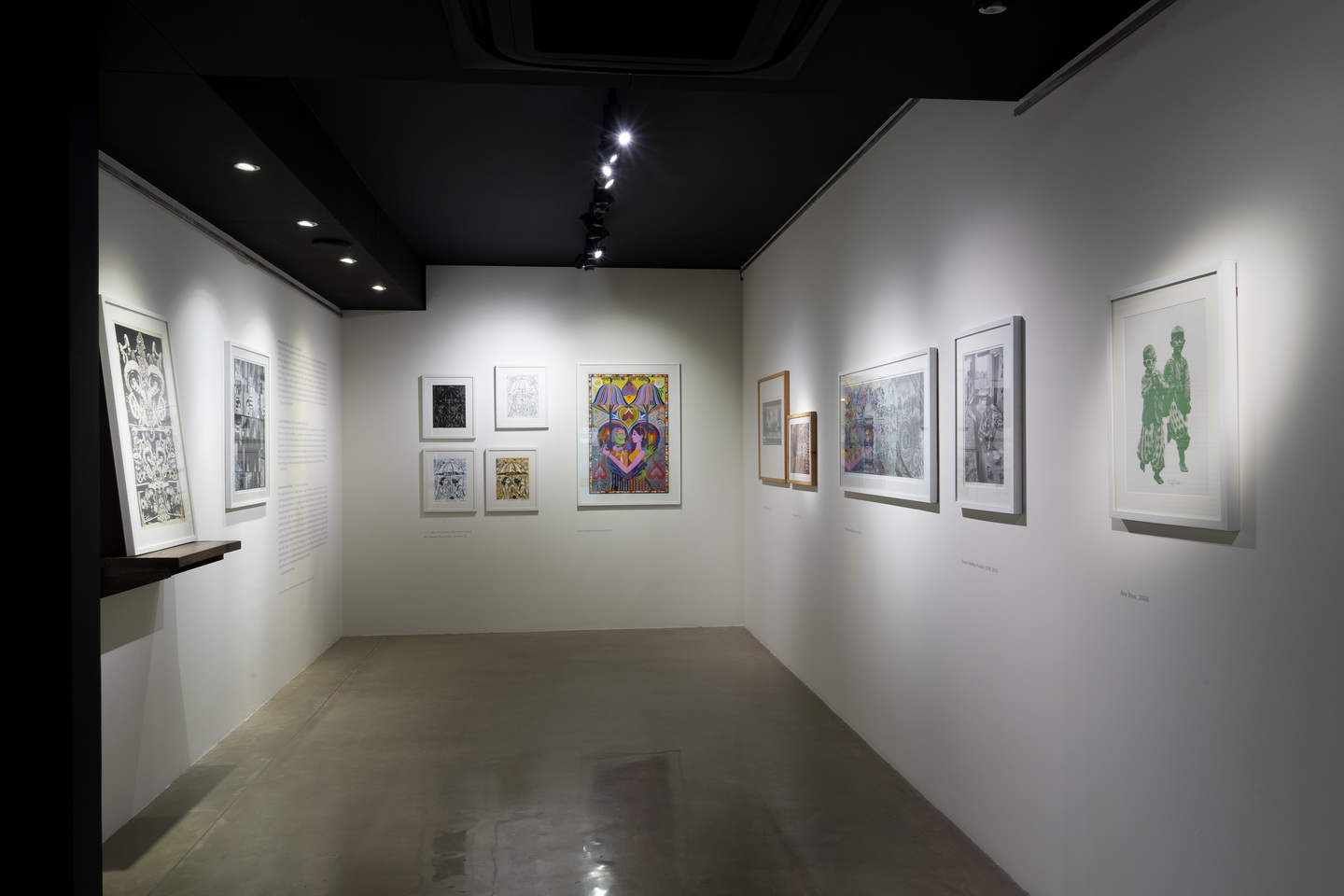
Jyoti Bhatt's artistic career starts in the early nineteen fifties. This was a few years after the country became independent. On one hand it was trying to define itself, and, on another, seeking a meaningful interaction with the cultures of the rest of the world. The attitudes of most artists were coloured by this desire. Jyoti was no exception. Naturally, his initial work is many-sided. On one hand he tries to re-read the artistic conventions he grew up with and use them for new purposes. On another, he tries to re-image reality in the light of diverse value stresses, not unlike many other artists of his time. At a further step he tries to reconfigurate everyday objects to give them a sense of 'otherness' or iconic gravity, like making a row of lamps or lanterns stand primly on a table-top like a line of votive figures. Then, he ventures forward into the exploration of various textures and surface values as seen in natural and man-made environments, like fields, roads, roofs and walls, again not unlike what a number of young artists were doing at that time on the global scene. They would have found the age-old preoccupation with the human drama rather boring and diverted their attention to the materiality of things. But Jyoti keeps his options open. He synthesises what he has culled from his previous explorations into a personal style and brings together many of the visual elements he previously played around with into a composite narrative - in a kind of cosmographic painting or print that has within it various legible insets but is, on the whole, enigmatically symbolic.

Jyoti Bhatt's total oeuvre is exciting because it covers a large spectrum of painting, printmaking and photography, highlighting the subtle cross-connections between each and spotlighting the aesthetic bond that each kind of art practice establishes between natural fact and the art object.

— K. G. Subramanyan
Excerpt from foreword, “Jyoti Bhatt: Parallels That Meet”
Edited by Roobina Karode, Delhi Art Gallery Pvt. Ltd., 2007

Address

Ark, Sub Plot No. 1, of Plot No. A/27-28 and B-29-32 Part, Shree Krishna Industrial Estate, Opposite BIDC Main Gate, Gorwa Road, Vadodara - 390016, Gujarat.

Visitor Information

Monday – Saturday, 11 AM - 5 PM
Closed on 2nd & 4th Saturdays, and public holidays